
MACRO DIVING & PHOTOGRAPHY IN PALAU
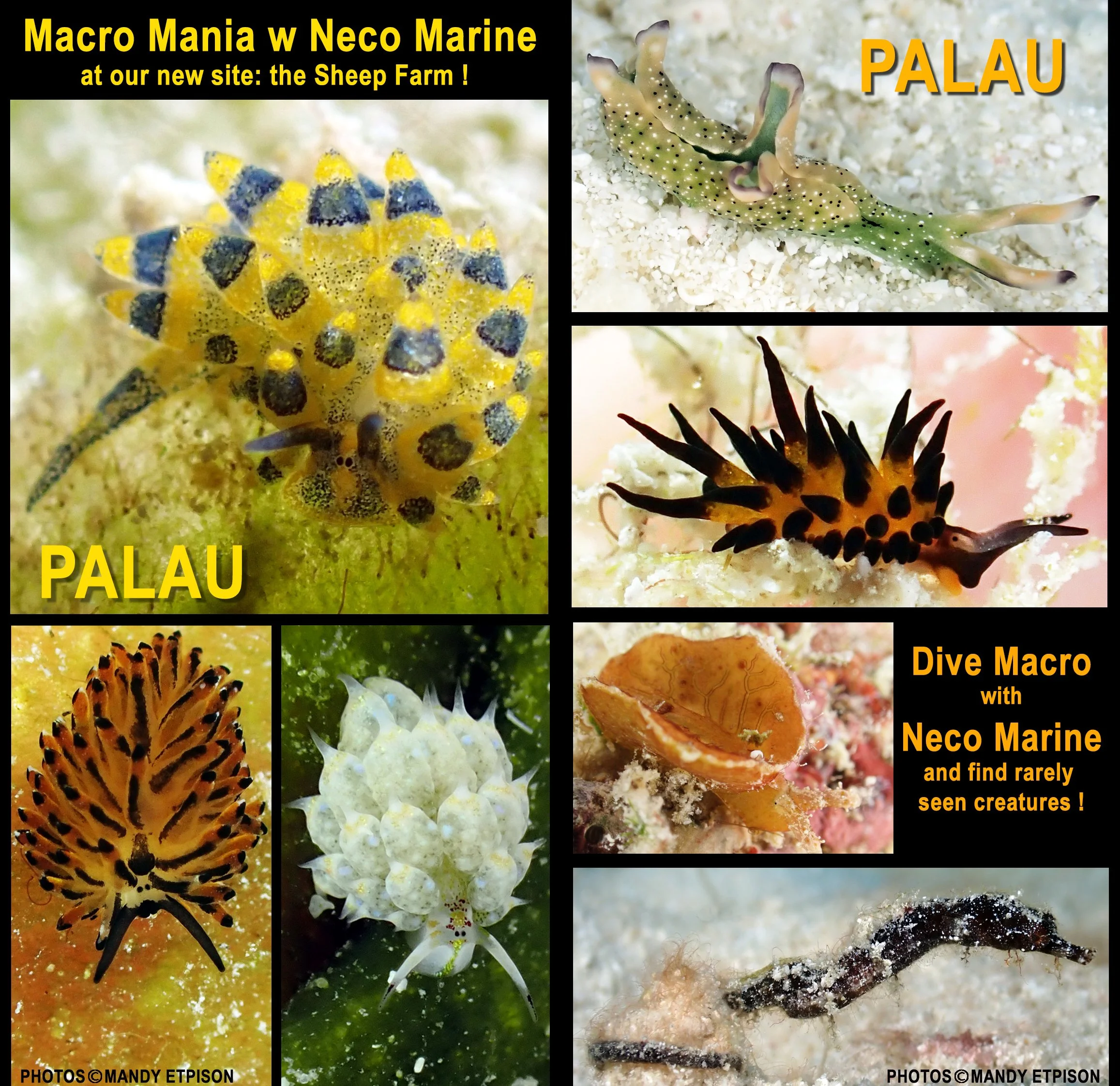
Like most underwater photographers, during my decades of diving in Palau I concentrated mostly on wide angle, capturing the big fish schools, spawning events, reef sharks and manta rays Palau is famous for. Last year my son encouraged me to get back into macro photography, and I was amazed at how many rare species we were able to find in just the last few months. You do not have to go far for these either, several of the best new sites we discovered, such as “the Sheep Farm”, a great site where you can find over 7 different species of Leaf sheep sap-sucking slugs as well as many other macro subjects, are within ten minutes boat ride from our Neco Marine dive dock on Malakal.
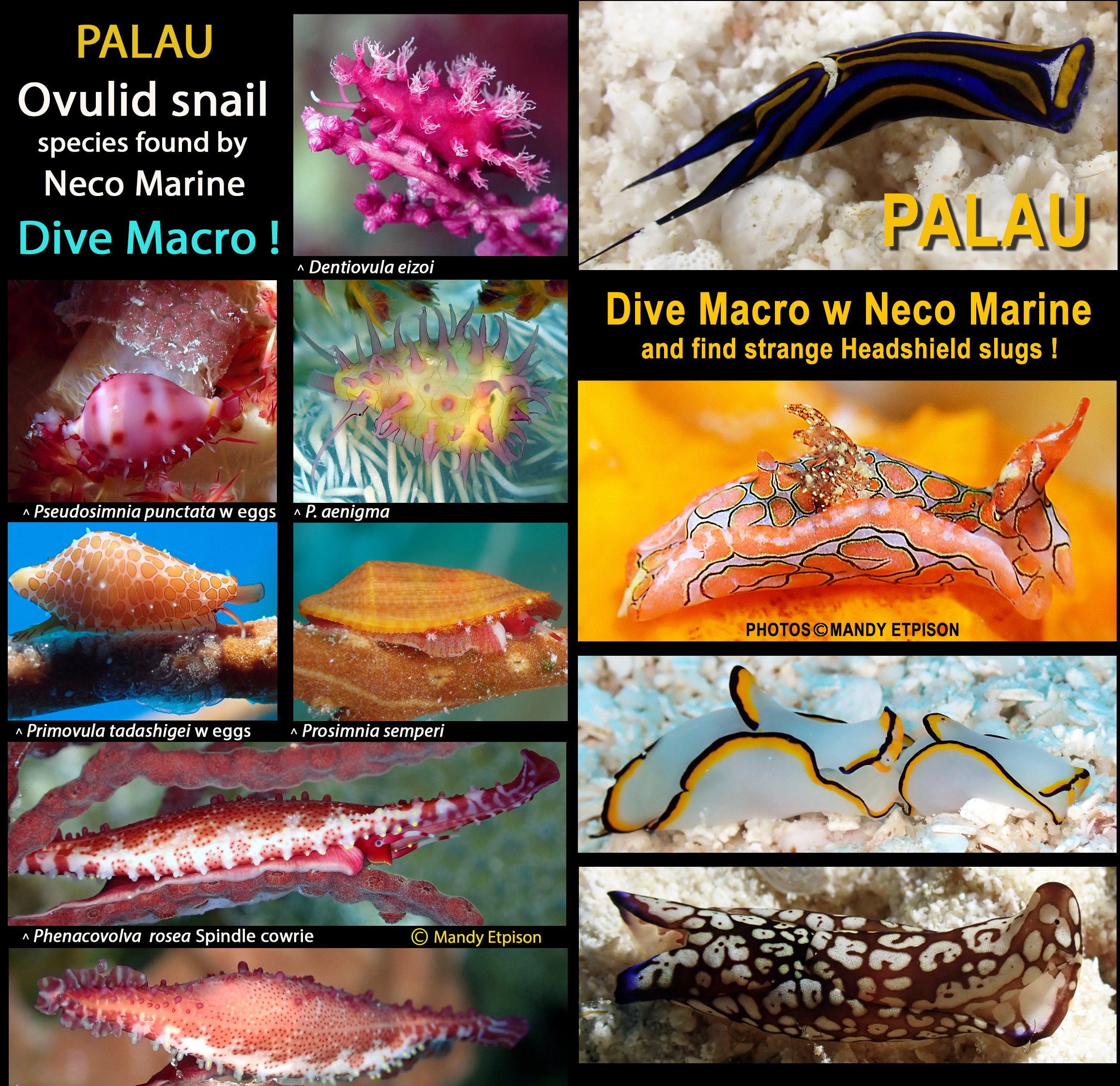
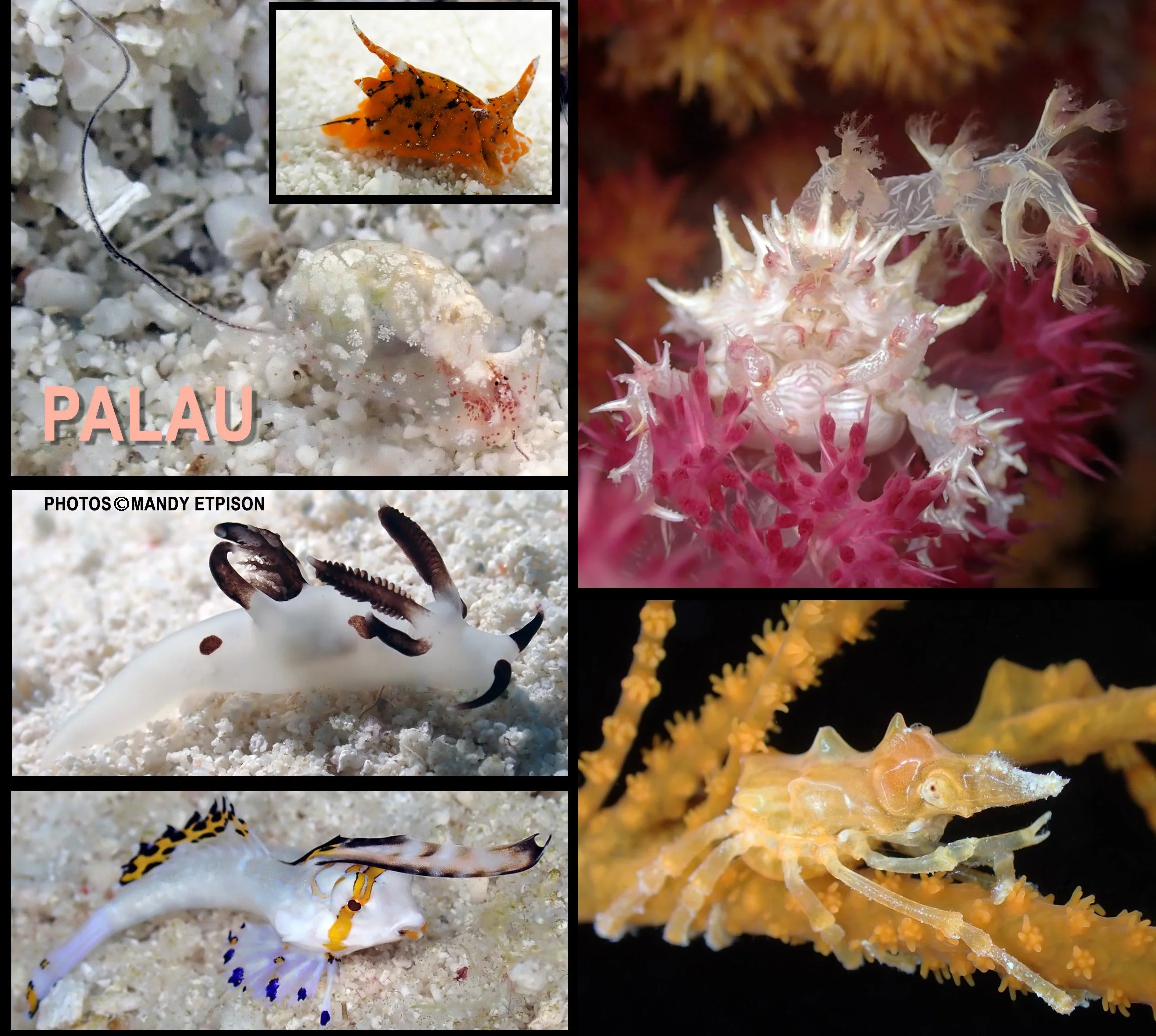
At the known outer reef wall dive sites around Palau you can find some amazing nudibranchs and invertebrates, mostly hiding between soft corals and sponges. But the more unusual species are found on 40-60 ft sandy bottom and slopes, and in shallower lagoon areas with concentrations of different species of algae and seagrass. Some nudibranch species are active day and night, while a lot of the Sap-sucking and Headshield slug species are active during the day only. Other invertebrates only come out at night, like the Pygmy and Bobtail squid, and a lot of the gastropod snails that emerge from the sand and from under rocks as soon as the sun goes down.
Tips for visiting tourist underwater macro photographers:
While you can find great macro subjects year-round, May-August are the best months in Palau to see mating nudibranchs, ovulid snails and their egg ribbons. Candy crabs also show up more during those months with bellies full of eggs, while they are difficult to find the rest of the year.
Plan your macro dives around slack tides, because Palau’s currents can be very strong, even inside the lagoons. Plan your night dives on incoming tides around the half moons, when the current will not be as strong, and there will be less plankton in the water to cause back scatter. If using a video light keep it on low or red light to avoid it attracting too much plankton.
Dive with an operator like Neco Marine who has experienced macro dive guides and spotters, and ask around for recent sightings of unusual species. Some of the best macro sites are close to Koror, and less fuel is used, so discounted macro packages are available during the slow summer season.